





Can You Paint Composite Doors? Yes — But 3 Factors Decide Whether It Lasts

Yes, you can paint a composite door, but it is rarely the best option. Composite doors are manufactured with the colour ingrained into a Glass Reinforced Plastic (GRP) skin, so a painted finish typically lasts only three to five years and may affect your manufacturer warranty.
At Countrywide uPVC, we supply and fit composite doors across Ormskirk, Maghull, Liverpool, Crosby, Formby and Southport. In this guide we explain when painting a composite door makes sense, what can go wrong, how to do it properly, how long the finish lasts, why the West Lancashire climate matters, and why a factory-finished door often outlasts a repaint.
The three factors that decide whether a painted composite door lasts are:
Can You Paint A Composite Door?
You can paint a composite door, but the colour is designed to be ingrained into the GRP skin for the life of the door, so painting is a temporary refresh rather than a permanent solution.
Most composite doors are made from several materials combined into one slab. They have a wooden subframe, a rigid insulating foam core, and an outer GRP (Glass Reinforced Plastic) skin. The GRP skin is hard-wearing and often carries a wood-grain effect to mimic a timber door. The colour is added during manufacture and sits within the fabric of the skin, which is why composite doors rarely need repainting. According to Homebuilding, this means the colour is ingrained rather than applied as a surface coating.
Examples of composite door components include:
- A wooden subframe for rigidity
- A high-density insulating foam core for thermal performance
- A GRP skin for weather resistance and colour retention
Because the colour is part of the skin, paint sits on top of the GRP rather than bonding into it. This is the core reason a painted composite door finish is less durable than the original factory finish. It also means a composite front door rarely needs repainting the way timber front doors do.
Should You Paint Or Replace A Composite Door?
Replacement is usually the better choice if the door is warped, cracked, swollen, leaking or no longer closing correctly.
Painting only refreshes the surface. It does not repair a door that has failed. Specialist coating guidance notes that painting is not a solution for a composite door that is cracked, warped, swollen or leaking. Paint does not restore a distorted slab, reseal a failed frame, or stop water ingress. It can, however, suit a faded-but-sound door that simply needs a colour change.
Painting is worth considering only when the door is structurally sound and you want a colour change. If the door has dropped, draughts have appeared, or moisture is passing the seals, the door or its installation has failed, and replacement is the correct route.
Does Painting A Composite Door Void The Warranty?
It can do, because some manufacturers treat repainting as a change to the original factory finish, so check the warranty terms before you start.
Many composite doors come with a guarantee of 10 years or more on the slab and finish. Specialist coating guidance states that manufacturers may view repainting as a modification of the original finish. If you later claim against the slab, surface, seals or hardware, a repaint could complicate or void that claim.
Before cleaning, sanding or painting, check the manufacturer’s warranty documentation. If the door is still within its guarantee period, the safest route is to ask the installer or manufacturer whether painting is permitted.
What Can Go Wrong If You Paint A Composite Door?
Poor preparation, the wrong paint, or painting in hot sun can cause flaking, peeling, bubbling and patchy adhesion.
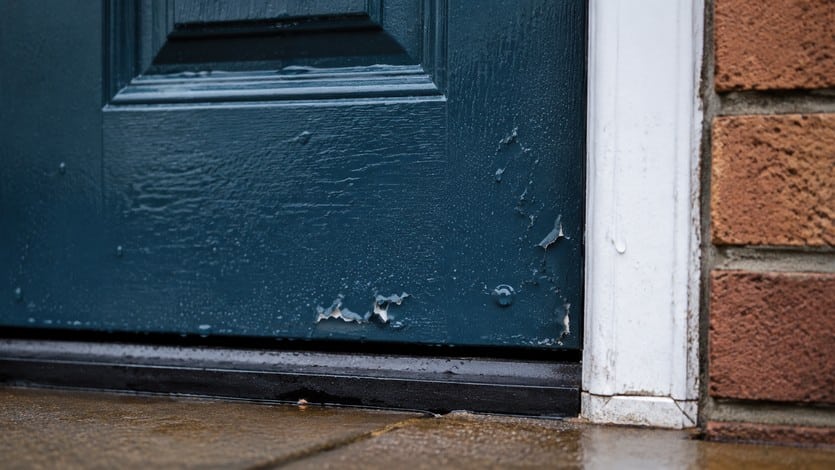
Most failed composite door paint jobs come from four causes: surface contamination, poor sanding, the wrong paint, and poor weather. Residue from silicone polish, wax or grease prevents paint from bonding and leaves small craters known as fisheyes. Standard wood paint and oil-based gloss do not adhere well to GRP and tend to peel.
Other common faults include:
- Bubbling, caused by direct sun, trapped moisture or incompatible paint
- Peeling at the edges, where water passes behind the paint film or flexible seals are painted
- A tacky finish, caused by applying paint too heavily or drying it in poor conditions
Painting a light composite door a much darker colour can increase solar heat absorption, because darker surfaces absorb more heat. A coating formulated for GRP and composite surfaces, applied within the manufacturer’s conditions, reduces this risk. A proper exterior paint and thorough prep help the paint adhere to the slick GRP skin; where the paint has not keyed, it is likely to peel first. A painted door is also more prone to fading and discolouration than the through-coloured factory finish.
When Is Painting A Composite Door Sensible?
Painting is sensible only as a cosmetic colour change on a door that is still sound, clean, dry and free from cracks or warping.
If your composite door is in good structural condition but the colour no longer suits your home, repainting can refresh its appearance without the cost of a new door. The door must be sound, with no movement, water ingress or distortion.
Painting is not sensible when:
- The slab is cracked, warped or swollen
- Water is passing the seals or threshold
- The door has dropped and no longer closes correctly
- The original GRP skin is peeling or heavily degraded
In these cases, the door has reached the end of its useful life, and a replacement composite door is the better investment.
How Should You Paint Your Composite Door?
Paint it carefully, using a coating formulated for GRP, uPVC and composite surfaces, after cleaning, light sanding and priming, in dry, mild weather away from direct sun.
The process follows a clear order: inspect, clean, mask, key, prime and coat. Each step affects how well the paint bonds to the GRP skin.
How Do You Prepare A Composite Door For Painting?
Clean the door with sugar soap, lightly key the GRP surface with 220 to 400 grit abrasive, mask the glass and hardware, then remove all dust.
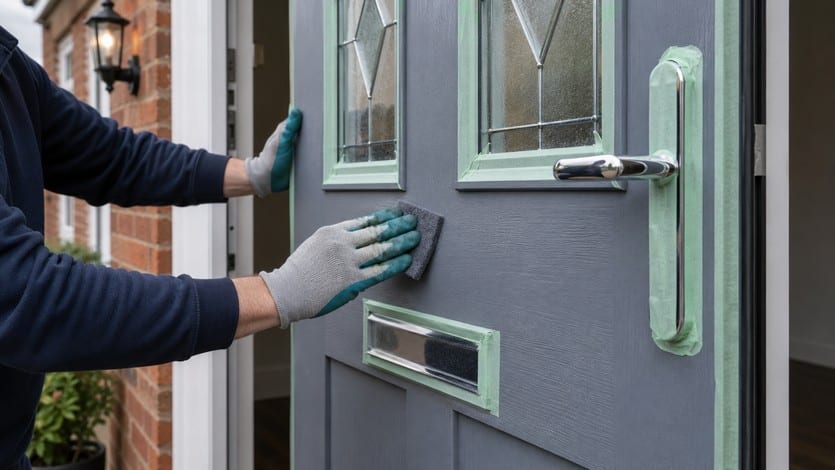
Preparation determines whether the paint lasts, so prep the surface carefully before you start. You need to clean the door thoroughly: brush it down to remove loose dirt, wash it with warm soapy water, then wipe it with sugar soap to lift grease and ingrained grime. Once dry, lightly abrade the skin with a fine abrasive pad or 220 to 400 grit sandpaper — you are using the sandpaper to create a slightly rough texture, or key, so the paint can grip, without sanding through the factory skin. Fill any chips or scratches and sand them smooth.
Prior to painting, mask the glazing, seals, hinges, handles, letterplate and threshold with masking tape. Do not paint flexible rubber seals or moving parts. Remove all dust with a damp cloth or tack rag, then work from the top of the door down when you coat, using a brush or roller for an even coat.
Which Paint Should You Use On A Composite Door?
Use an exterior-grade coating formulated for GRP, uPVC and composite surfaces, not standard wood paint or oil-based gloss.
Specialist coating systems are designed to bond to GRP and composite skins and to resist UV, rain and temperature change, so they are suitable for composite doors. Options include water-based acrylic latex paints, dedicated coatings sold to paint uPVC and composite surfaces, and popular ranges such as Frenchic Al Fresco — the Al Fresco range is a mineral-based exterior paint many people use on front doors. Some are self-priming, while others require a primer; a primer will help the paint grip when you are covering a dark door with a lighter colour. Homebuilding notes that wood paint does not bond well to a composite door, so avoid standard wood paint and oil-based gloss.
You can finish in gloss or satin depending on the look you want, and a high-quality exterior paint gives the best finish and the most long-lasting, durable finish. Apply two to three thin, even coats — thin the paint slightly if it drags, and keep coats thin to avoid drips. Work from the top down, allow full drying time between coats, and remember the choice of colours is wide, so take your time choosing a colour that suits your home. A well-painted door stays reasonably easy to clean, but composite doors generally don’t need to be painted at all, because the colour is built in.
What Weather Should You Paint A Composite Door In?
Paint in dry, mild conditions, with no rain forecast and no direct hot sun on the door.
Specialist paint guidance recommends painting in dry, mild weather and keeping the door away from direct sun. Moisture and heat both interfere with adhesion. Painting on a humid day, or when rain is forecast, risks trapping moisture under the film and causing blistering.
A practical range is between roughly 10°C and 25°C, in line with the conditions most exterior coating manufacturers specify. Avoid painting late in the day, when the door does not dry before temperatures fall.
How Many Coats Does A Composite Door Need?
Most composite doors need two to three thin, even coats, with full drying time between each.
Two coats give a solid, even coat. A dramatic change of colour, such as dark blue to white, often needs a third coat and a primer and paint combination for full coverage. For the best results, allow each coat of new paint to dry fully before applying the next, and avoid heavy use, hard closing against the seals, or refitting hardware until the coating has cured. Whether you use a brush, roller or spray paint, thin, even coats always beat one heavy coat.
How Long Does A Painted Composite Door Finish Last?
A repainted composite door typically lasts three to five years, compared with the 20 to 30 year lifespan of the original factory finish.
Homebuilding reports that a correctly completed repaint can look good for years, but a painted finish is less durable than the original factory finish — it offers lower durability and is prone to fading and discolouration — and repainting is usually required every three to five years. A composite door itself has a lifespan of around 20 to 30 years. This means a door may need repainting five or more times across its life, whereas a factory-finished GRP skin retains its colour without repainting.
Why Do Ormskirk Homes Need Weather-Resistant Composite Doors?
Ormskirk and the surrounding West Lancashire area see regular rain, wind and coastal exposure, so a factory-finished GRP composite door outlasts a painted surface.
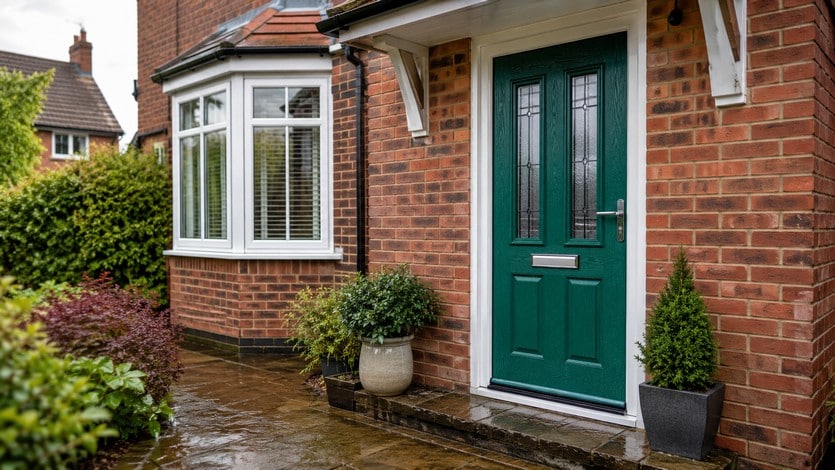
Ormskirk sits in West Lancashire, a relatively flat and exposed area. Local homes face regular rain, wind and rural exposure, and around Formby and Southport, coastal conditions add salt-laden air and stronger winds. Wind-driven rain tests any front door, and a painted finish that has not bonded well fails sooner in these conditions.
This is the key reason a factory-coloured GRP composite door suits Ormskirk homes. The colour is ingrained into the skin, so there is no surface coating to peel in the coastal and rural climate. For properties in exposed positions, such as those facing open farmland near Burscough, Aughton, Scarisbrick and Halsall, or the busier frontages of Liverpool and Crosby, a durable factory finish needs far less maintenance than a repaint.
Which Areas Do We Supply And Fit Composite Doors Around?
We supply and fit composite doors across Ormskirk, Maghull, Liverpool, Crosby, Formby and Southport, serving homeowners across Merseyside and Lancashire.
Countrywide uPVC is based in Ormskirk, and our team fits composite doors for homes throughout the surrounding region. Each area has its own characteristics that affect exterior doors:
- Ormskirk and Maghull: family homes and period properties where kerb appeal and security matter
- Formby and Southport: coastal exposure to salt air and wind, favouring a weather-resistant GRP skin
- Liverpool and Crosby: urban road pollution and busy frontages, where a low-maintenance finish is valuable
Beyond these, the nearby West Lancashire communities around Ormskirk, including Burscough, Aughton, Scarisbrick, Halsall and Skelmersdale, share the same rural exposure and weather-facing entrances that favour a durable, factory-finished composite door.
Why Choose Countrywide uPVC For Your Composite Door?
We supply and fit energy-efficient, secure composite doors backed by over 25 years of experience, with free, no-obligation quotes and no hidden costs.

We have spent over 25 years installing windows and doors across Merseyside and Lancashire. Our composite doors come in a wide range of styles, a large choice of colours, glazing designs and hardware options, so you can match the door to your home. These composite doors are built with energy efficiency and security in mind, using secure multipoint locking systems, and the factory finish is long-lasting, easy to clean and gives a durable finish that needs no repainting.
Under Building Regulations Approved Document L, replacement external doors in existing dwellings are specified against a 1.4 W/m²K U-value or the relevant Doorset Energy Rating route, and we can advise on composite door options that meet current thermal requirements. For security, look for composite doors tested to PAS 24 and accredited under Secured by Design, the official UK police security initiative; these offer proven resistance to forced entry. A factory-fitted door also keeps its warranty intact, unlike a door that has been repainted.
Can We Help You Decide Whether To Paint Or Replace?
Yes — we can advise whether painting, repairing or replacing your composite door makes the most sense for your home.
If your composite door is faded but sound, painting may be a reasonable short-term refresh. If it is warped, cracked, leaking or out of warranty, a replacement fitted by our team is the better long-term choice. We offer a free, no-obligation site visit and a fully costed quote, with no hidden costs and no unexpected surprises.
To explore composite door styles, colours and glazing options, visit countrywideupvc.co.uk or contact us to arrange your free quote.
Not sure whether to paint or replace?
Get a free, no-obligation site visit and a fully costed quote from a team with over 25 years installing doors across Merseyside and Lancashire — no hidden costs, no surprises.
What Questions Do Homeowners Ask About Painting Composite Doors?
Homeowners usually ask about colour changes, cost, durability and whether replacement makes more sense than repainting.
Can You Paint A Composite Door A Different Colour?
Yes, you can change the colour of a composite door using a suitable exterior coating, but a dark-to-light change may need a primer and extra coats.
A colour change works only on a sound, well-prepared door. Covering a dark blue or black door with a lighter colour usually requires a primer and three or more coats to achieve full coverage.
Is It Cheaper To Paint Or Replace A Composite Door?
Painting is cheaper upfront, but a new composite door offers better value over 20 to 30 years because the factory finish needs no repainting.
A repaint costs less initially but lasts only three to five years. Across the life of a composite door, a factory-finished door fitted once often costs less than repeated repainting, and it avoids the warranty and adhesion risks.
Do You Need To Paint A Composite Door?
No — most composite doors don’t need to be painted, because the colour is manufactured into the GRP skin. You only need to paint a composite door if you want a change of colour or the factory finish has faded.
Composite doors are built to last without repainting, so you don’t need to paint one for protection. The usual reason people want to paint a composite door is a change of colour, or to refresh a tired, sun-faded door — not because the door itself has failed.